End-of-service gratuity, calculated and shown
Every gratuity figure with the article number that produced it, a company-wide liability total, and an honest account of where the law admits more than one reading.
What it actually does
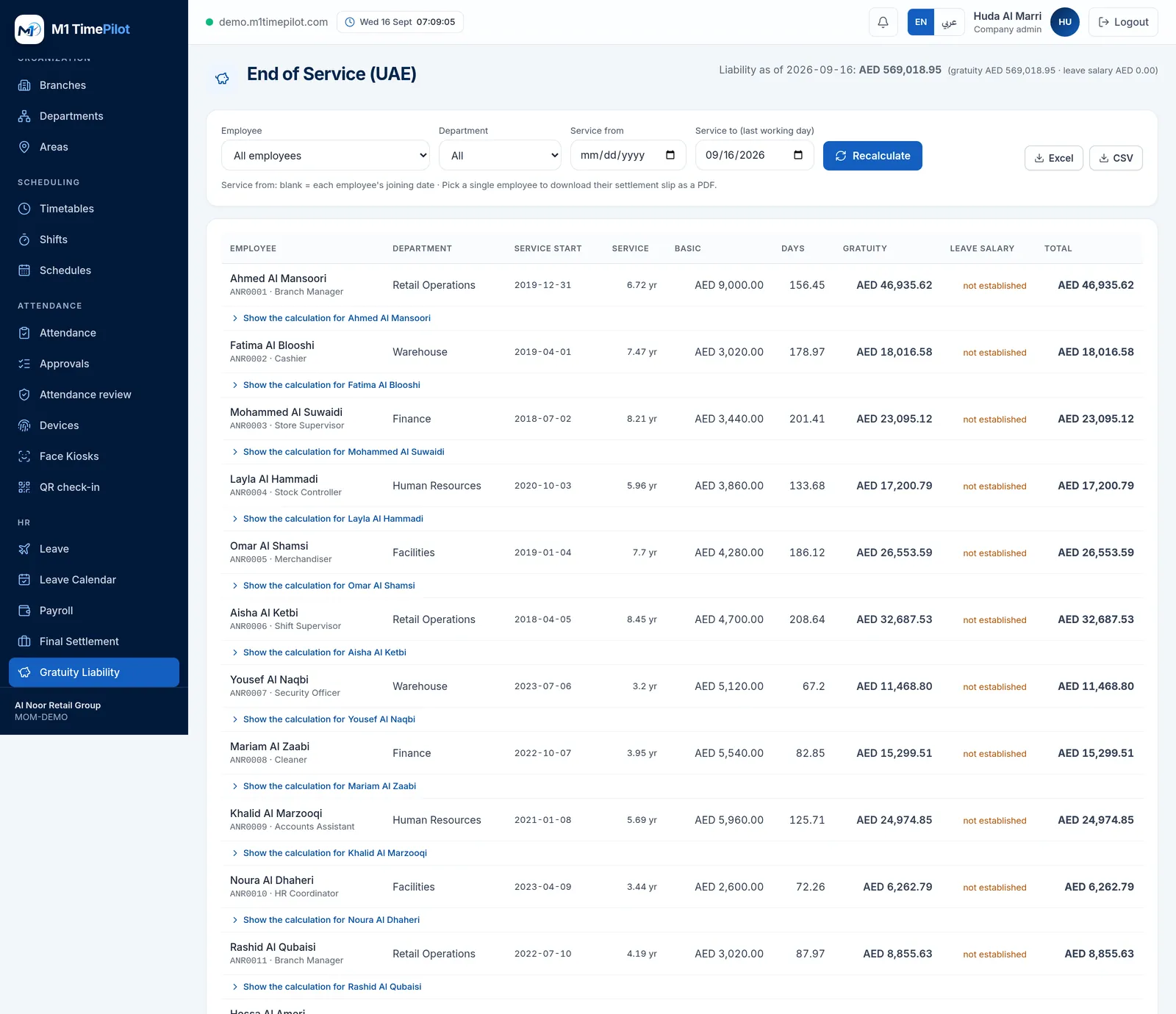
The article is on every line
A gratuity figure that cannot be explained is a dispute waiting to happen. Each line of the breakdown carries the article it comes from, so the number can be defended rather than asserted.
21 days, then 30
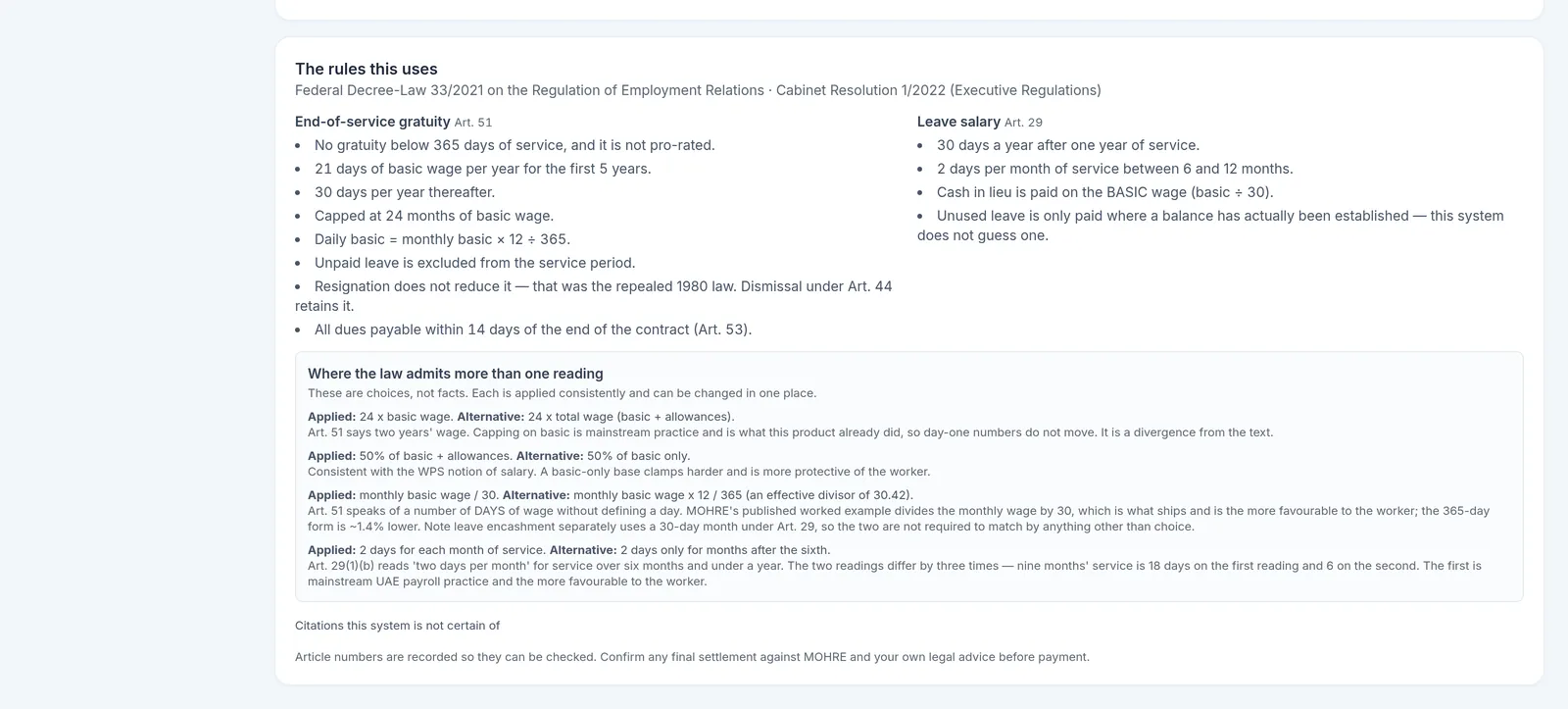
Twenty-one days of basic wage for each of the first five years, thirty days per year after that, capped at twenty-four months of basic wage. Nothing is payable below 365 days of service, and it is not pro-rated.
Unpaid leave comes out
Unpaid leave does not count towards the service period, so it is excluded automatically from the leave ledger rather than left for someone to remember.
Resignation does not cut it
The reduction on resignation belonged to the repealed 1980 law. Dismissal under Article 44 retains the entitlement. Both are handled as the current law requires.
Liability, not just payslips
The company-wide total shows what you would owe if everyone left today, split between gratuity and leave salary, filtered by department or employee.
Dues inside fourteen days
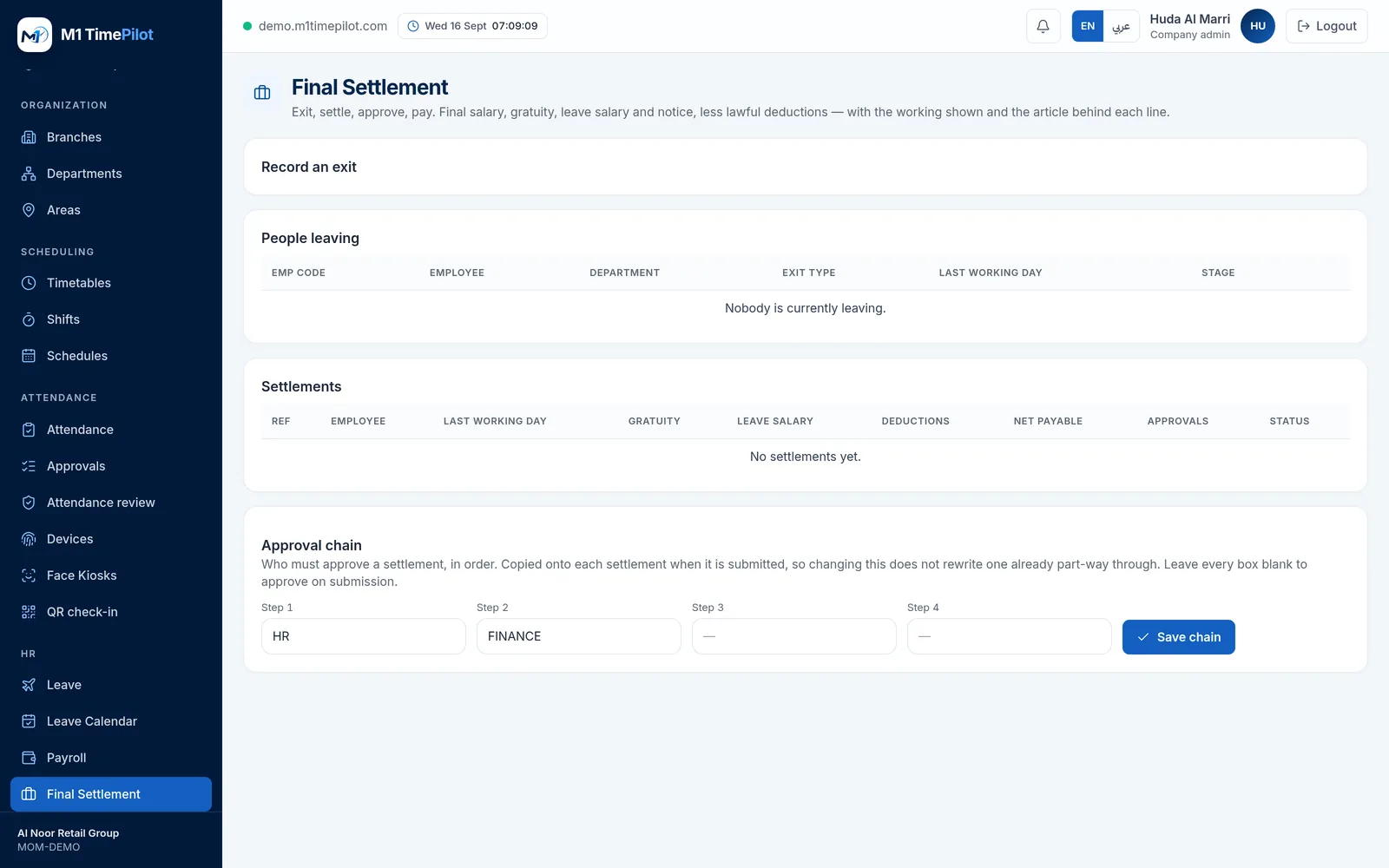
Article 53 requires all dues within fourteen days of the end of the contract. Final Settlement is a separate screen with its own approval workflow, and once approved it freezes a snapshot.
Where the law admits more than one reading
This is the part most systems hide. Article 51 speaks of a number of days of wage without defining a day, and there is more than one defensible way to read it. M1 TimePilot states which reading it applies, what the alternative is, and why — and it lists the citations it is not certain of, so your accountant or your lawyer can check them rather than trust them.
Final settlement, with an approval trail
Gratuity is one line of a leaving employee’s last payment. The Final Settlement screen assembles all of them — notice pay in lieu under Article 43, outstanding leave salary, loan balances still owing, and any lawful deduction — into one document that someone has to approve before it is paid.
Frequently asked questions
No. Reduction on resignation came from the 1980 law, which was repealed. Under Federal Decree-Law 33/2021 a worker who resigns after a year keeps the full entitlement, and M1 TimePilot calculates it that way.
From the joining date on the employee record, excluding unpaid leave, which does not count towards the service period. Every leave day that was recorded as unpaid is taken out of the calculation automatically.
Yes — that is the point of the screen. Every employee row expands into a line-by-line breakdown, and each line carries the article number it comes from. You can hand that to an employee, or to a lawyer.
The product lists them. Where Article 51 admits more than one defensible reading, the screen states which reading is applied, what the alternative would be, and why the choice was made. It also lists the citations it is not certain of, so you can check them.
Yes. The Gratuity Liability view totals what you would owe if everyone left on a given date, split between gratuity and leave salary, filterable by department or employee. Most finance teams want this at year end.
Excel and CSV for the whole company, and a PDF settlement slip per employee. The PDFs are produced in English only — the PDF engine cannot shape Arabic text, and a half-rendered Arabic settlement is worse than an English one.
Ready to get started?
Start a free trial, or talk to us about your sites, devices and shifts.